Field notes: the day the shadows said more oil than the report did
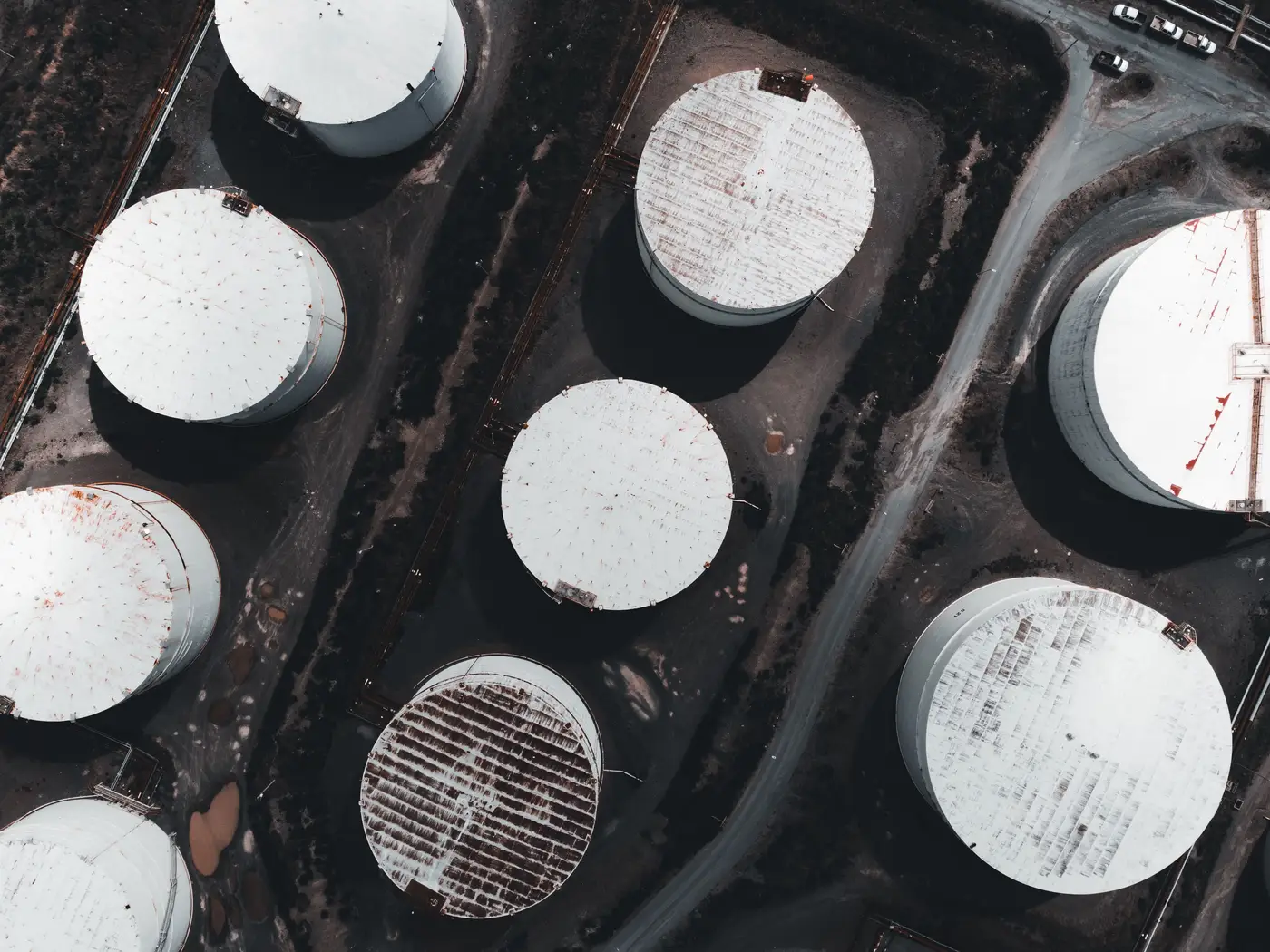
Wednesday, 10:15 a.m., and the API number hadn't even posted yet. I was looking at a set of floating-roof tanks outside Cushing from the day before, trying to figure out why the roofs looked higher than the market seemed to think they should.
A floating roof doesn't lie about volume. It just doesn't talk much. The roof sits on the oil and rides up and down with it. The deck recess, the lip where the roof meets the shell, throws a shadow whose length tells you exactly how far down that roof has settled. No disclosure, no survey call, just geometry and the sun doing what the sun does every day regardless of whether anyone's filed a report.
That Tuesday, a cluster of forty-plus tanks in a few of the Cushing farms showed roofs sitting noticeably higher than they had two weeks prior. Not dramatically. A few feet of shadow difference per tank, consistent across most of the cluster, which is the part that made me pay attention. One tank running high is noise. Forty tanks running high in the same direction, in the same week, is a pattern.
The weekly EIA print wasn't due until Thursday. The private surveys that usually leak early were quiet, or at least quieter than the shadows. So for two days I had a storage picture that the market hadn't priced yet, built off nothing more than sun angle and roof position across a defined patch of ground.
Thursday's number came in and it was a build, bigger than the consensus guess, and Cushing specifically showed a meaningful add. The futures curve did what it does when storage surprises to the upside: the front month softened against the next couple of contracts, contango got a little steeper for a session. None of that was a surprise to anyone who'd been watching the roofs climb for two days already.
I want to be careful here. This isn't a story about calling the number. Shadow geometry gives you a fill-level read on the tanks you can see, not a barrel count for the whole PADD, and it won't catch what's moving through pipe or sitting in a cavern. What it does is take away the wait. You're not sitting on your hands between Friday's partial survey leak and Wednesday's API number hoping nothing's changed. You get a daily read on the same tanks, every day, and when the roofs start moving as a group, you notice before the report tells you to.
That's really the whole trade here. A terminal operator discloses on their schedule, a trade group surveys on theirs, and the government publishes on a fixed weekly cadence that was designed for a slower market than the one most desks are actually trading. The shadows don't wait for any of that. They're there every day the sky's clear, on every tank with a roof that moves, regardless of what anyone upstream feels like telling you about what's in it.
I've started treating a multi-day drift across a tank cluster the same way I'd treat a change in rig count or a refinery utilization shift: a signal that changes how much weight I put on the next official print. The site I use for this, oiltankfill.com, runs that daily shadow read on the farms I care about and hands back a per-tank fill estimate before the report ever shows up, which is most of the value right there.
The report caught up Thursday, same as it always does. By then I'd had the number for two days. Most of the desk got it when the print hit the wire.
If you'd rather see the roofs move before the headline does, that's what Oil Tank Fill is built for.