Blog
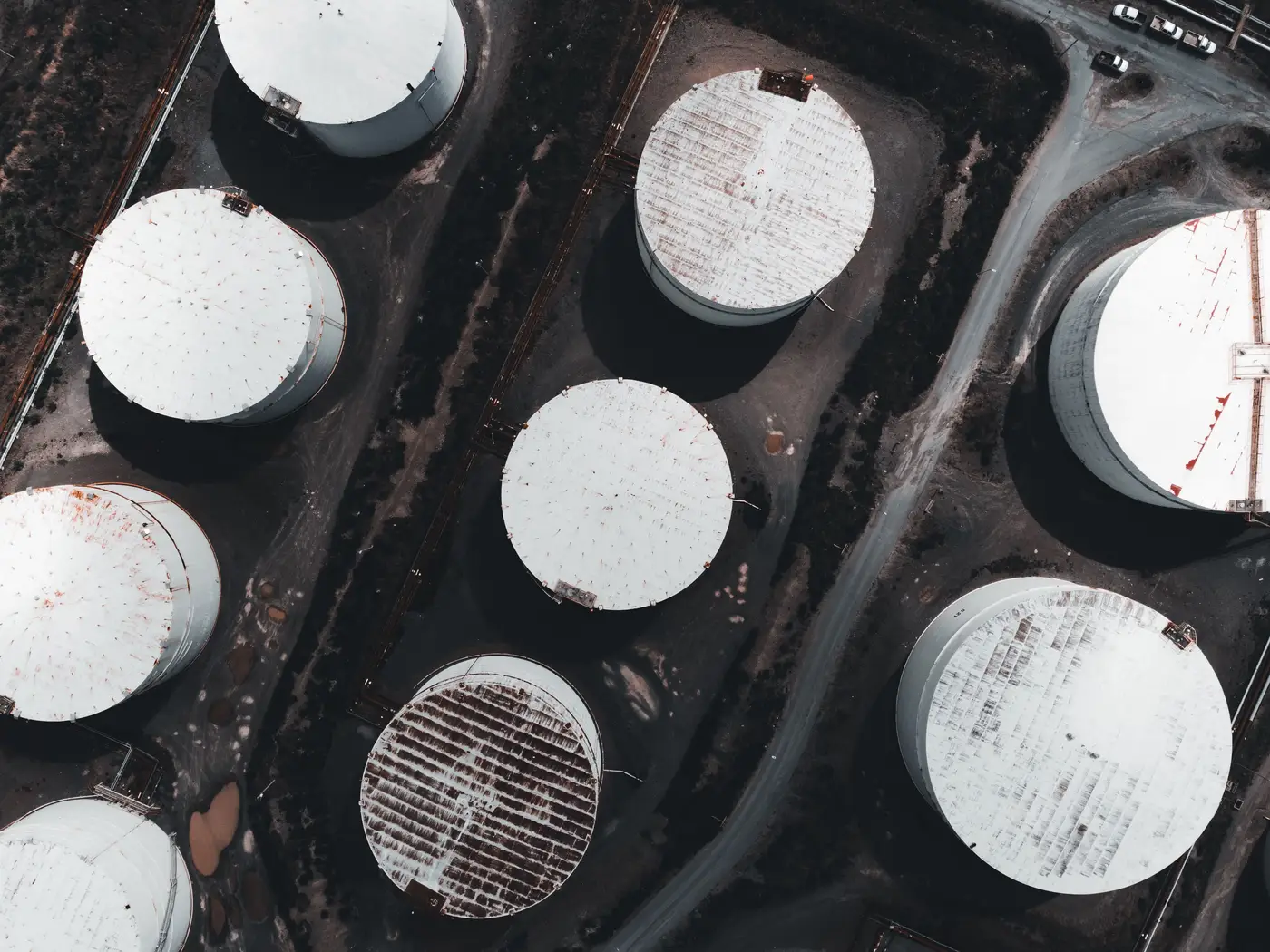 Field notes: the week the sun sat too low to read a tank
A short field note on what happens to shadow-based tank reads when the winter sun angle collapses, and how the method handles it.
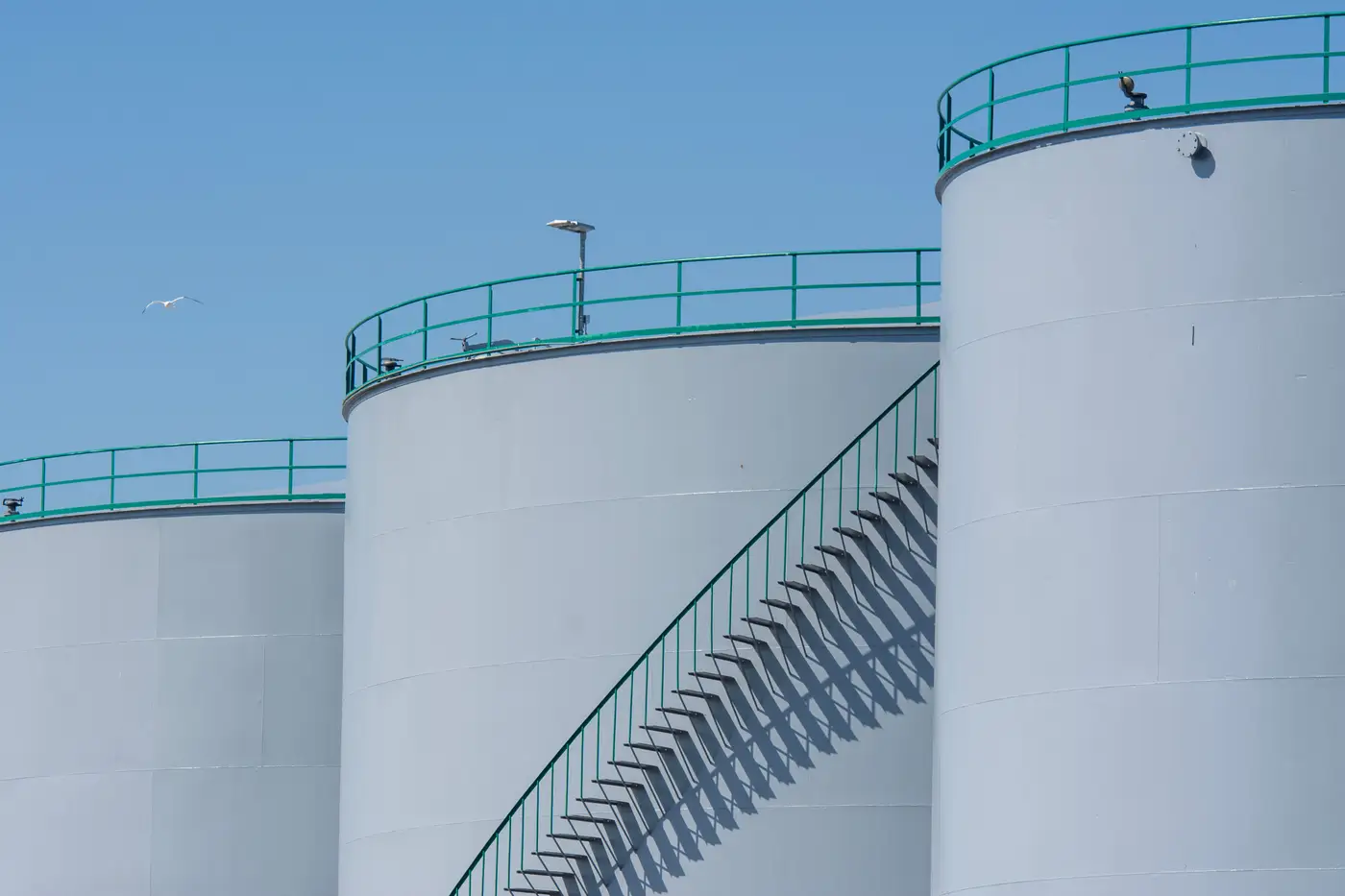 What a rim seal does, and why a worn one won't throw off a shadow read
Rim seal wear affects vapor loss, not roof position. Here's why a shadow-geometry fill read stays accurate on a tank with a tired seal.
- Dome roof or floating roof? Telling crude tanks apart in satellite imagery
How to spot the difference between dome roof and floating roof crude tanks in satellite imagery, and why it changes what a fill read can tell you.
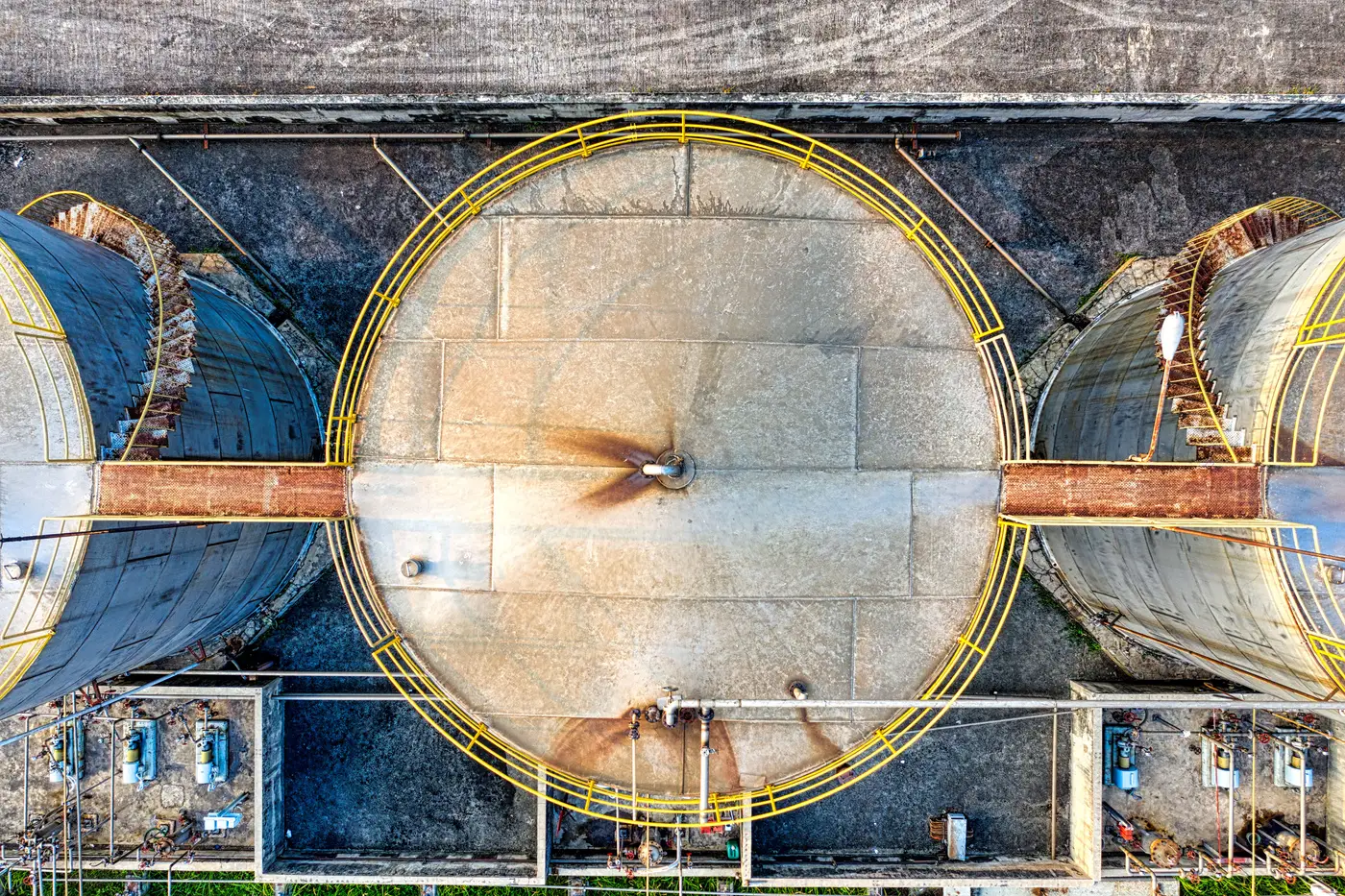 Roof drains, pooled water, and why your shadow-based fill read can wobble
How roof drains work on floating roof tanks, why pooled rainwater confuses shadow geometry, and what it means for daily fill-level reads from imagery.
- Field notes: the terminal that added a fourth tank and told nobody
A field note on how storage terminals add capacity without filing a public notice, and why the gap matters more than the headline number.
 What tank bottoms are, and why they never count as usable storage
Tank heel, clingage, and dead stock cut into nameplate capacity before a barrel ever ships. What's actually drawable in a crude tank, explained.
- How to estimate tank diameter from satellite imagery
A working method for pulling tank diameter off overhead imagery and converting it to barrel capacity, plus where the math stops telling you anything useful.
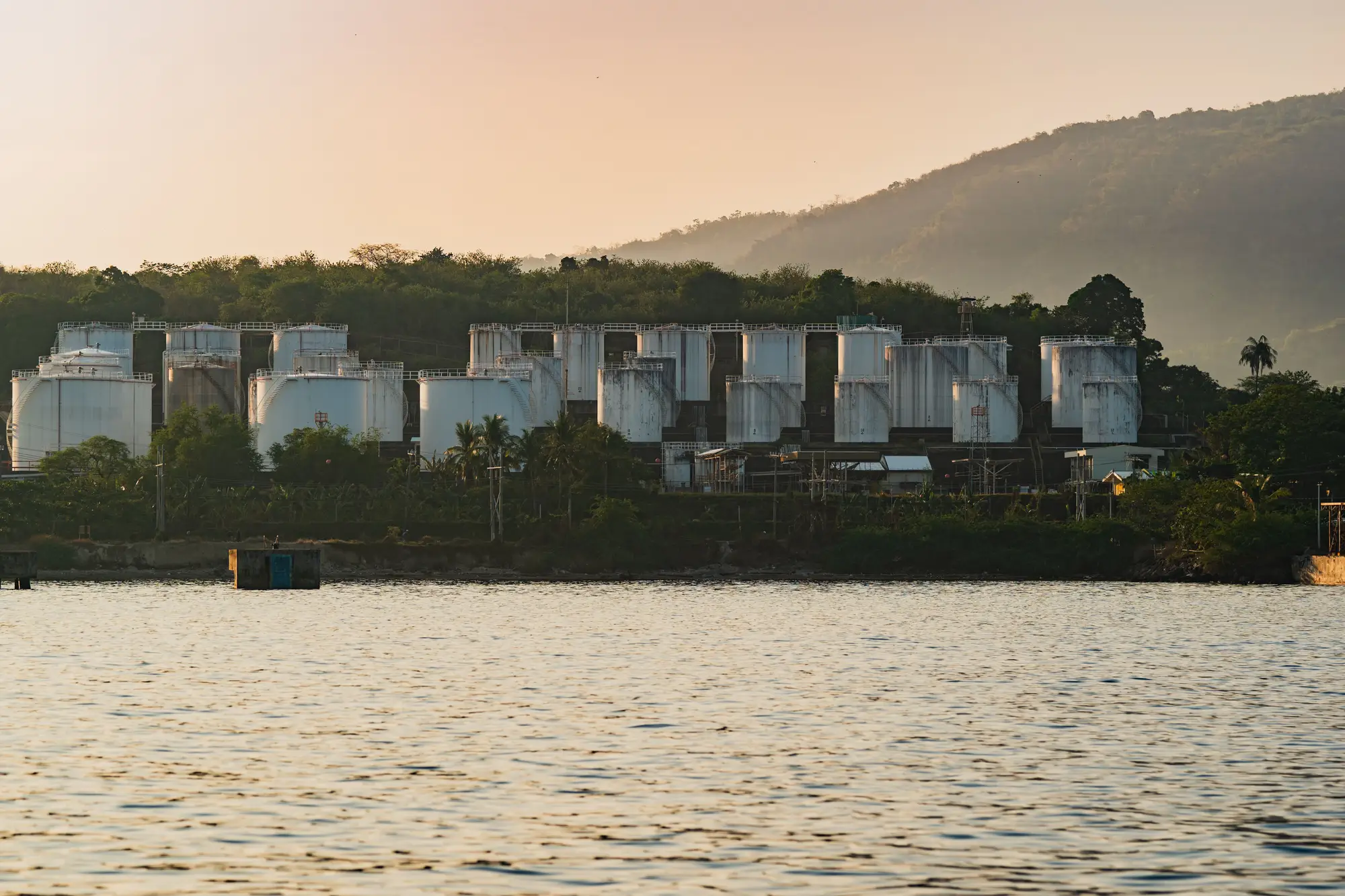 What is a tank farm? Defining the fence line for a storage read
A tank farm is more than a cluster of tanks on a map. Here's how analysts draw the boundary before pulling a storage read.
- Field notes: the day the shadows said more oil than the report did
A Cushing storage read from shadow geometry ran ahead of the weekly inventory print by three days. Here's what that gap looked like.
- Pontoon roof vs double-deck roof: what the roof type tells you about capacity
How pontoon and double-deck floating roofs differ, and why knowing which one sits on a tank changes how you read its shadow from above.
- Radar tank gauge vs satellite shadow read: what each tells a trader
Radar gauges measure level inside the tank. Shadow reads estimate fill from outside. Here's what each gives a trader, and when.
- Why roof legs flatten the shadow read near empty
Floating roof legs change how shadow geometry reads near empty. Here's why the shadow stops moving linearly as draw-down approaches tank bottom.
- Commercial crude stocks vs. strategic reserves: what actually separates them
Commercial crude stocks and the SPR are tracked in the same report but behave nothing alike. Here's how to read each one correctly.
- IFR vs EFR tank: how to tell them apart from the air
A field guide to spotting internal floating roof vs external floating roof tanks in aerial and satellite imagery, before you try to read fill level.
- Fixed-roof vs floating-roof tanks in satellite imagery
How to tell fixed-roof from floating-roof tanks in satellite imagery, and why the shadow geometry only works on one of them.
- How to track Cushing crude stocks between EIA weekly reports
The EIA's Cushing number updates weekly. Here's how traders and analysts read storage in the days between reports.
- Ullage vs. fill level: what each number actually tells you
Ullage and fill level measure the same tank from opposite ends. Here's the difference, and why mixing them up skews a storage read.
- Shell capacity vs. working storage: what each number tells you
Shell capacity is the nameplate number. Working storage is what a tank can hold day to day, and the gap between them changes the math.