What a rim seal does, and why a worn one won't throw off a shadow read
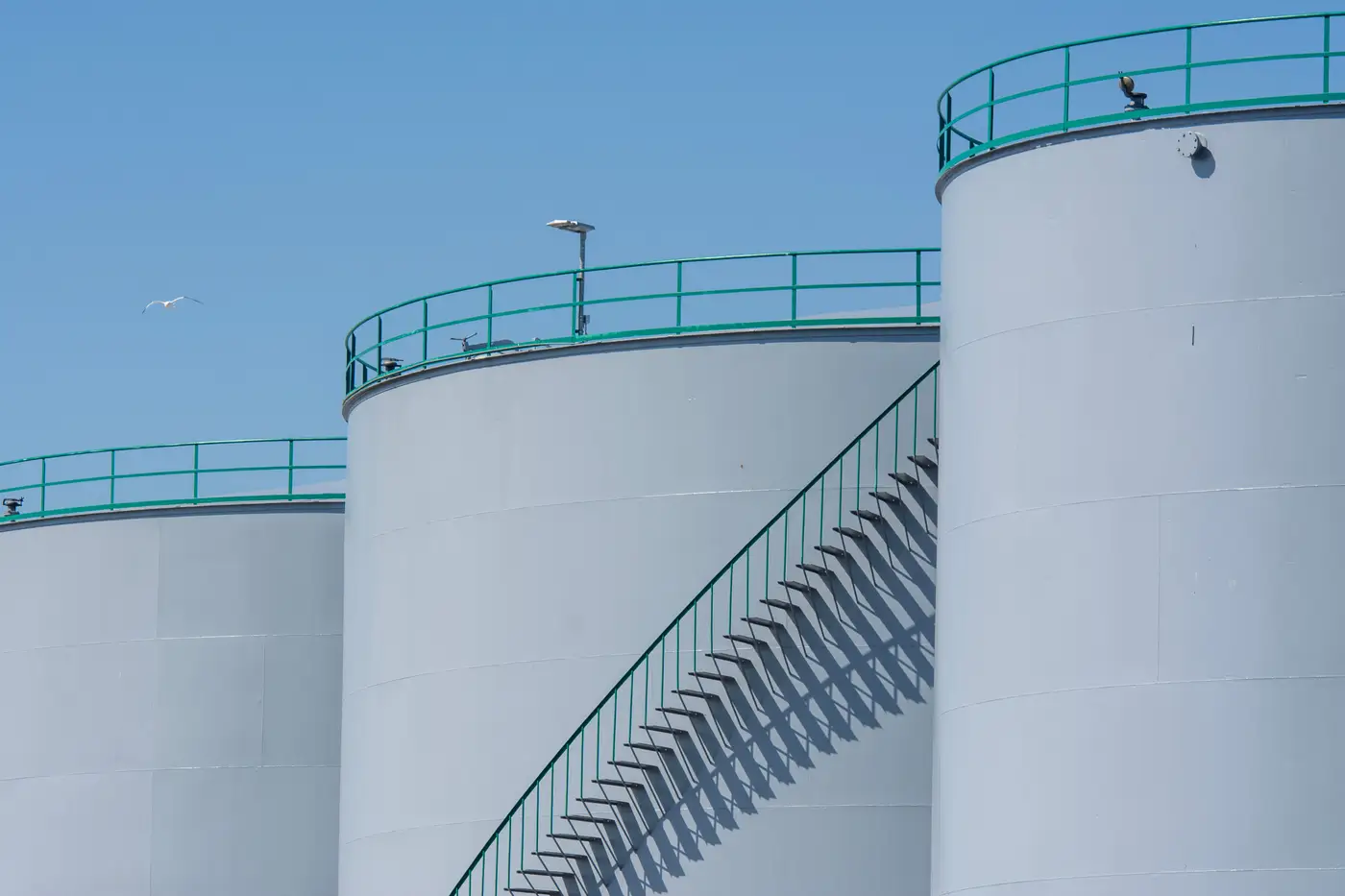
A trader who's spent time around terminals knows the rim seal by its other job: the thing that keeps vapor from venting off the annular gap between the floating roof and the tank shell. It's not there to hold the roof level or tell you how full the tank is. That distinction matters more than it sounds like it should, especially once you start pulling fill reads from overhead imagery instead of a gauge report.
Primary seal vs. secondary seal, in plain terms
Most floating-roof tanks run two seals stacked on top of each other. The primary seal sits directly against the shell, usually a mechanical shoe or a liquid-mounted tube, and does the bulk of the vapor containment work. The secondary seal rides above it, a simple wiper-style seal that catches whatever the primary misses and takes the brunt of wind and weather.
Operators replace these on a schedule, or when an emissions inspection flags excess loss across the gap. A primary seal that's cracked or pulled away from the shell lets more product vapor escape and shows up in the tank's loss numbers long before anyone outside the fence line notices anything. The secondary seal wears faster since it's exposed, and a torn section is routine enough that it rarely triggers an immediate shutdown for repair.
None of that touches the one thing a floating roof does that a shadow read actually cares about: sitting on top of the liquid and rising or falling with it.
Why the geometry doesn't care about seal condition
A floating roof read from imagery works off the shadow the rim casts inside the tank wall. As the roof rides lower, that shadow gets longer because there's more depth between the rim and the liquid surface up top. As it rides higher, near a full tank, the shadow shrinks toward nothing. That relationship holds regardless of whether the rim seal underneath the roof edge is brand new or three years past its inspection date, because the seal doesn't change where the roof sits. It changes how much vapor leaks past the edge while the roof stays in place.
Put another way: seal wear is a loss-accounting problem for the operator and an emissions problem for the regulator. It is not a position problem for the roof. A tank with a tired seal and one with a fresh seal, both holding the same volume, put their roofs at the same height and cast the same shadow. The gap a worn seal opens up is measured in inches around the rim's circumference, not in feet of roof travel, and it doesn't move the roof itself.
One related failure mode is worth naming on its own terms. A roof that's hung up, tilted, or partially sunk changes the geometry a shadow read measures. That comes from structural rim problems on a badly maintained tank, a different condition than ordinary seal wear, and it produces an inconsistent or physically odd read rather than a clean one that's quietly off. Routine seal maintenance, the kind every terminal runs on a rotation, stays outside that category.
For a trader piecing together a storage view ahead of a weekly report, here's what it comes down to: you don't need a terminal's seal maintenance history to trust a geometry-based read on that tank. You need the roof intact and the sun hitting it at a usable angle. Our rundown of how the daily fill-level read works across a tank farm goes into what the imagery captures and what it doesn't.
If you're tracking storage ahead of the next inventory print and want a read that doesn't wait on an operator's disclosure, that's the problem Oil Tank Fill is built around.