Field notes: the week the sun sat too low to read a tank
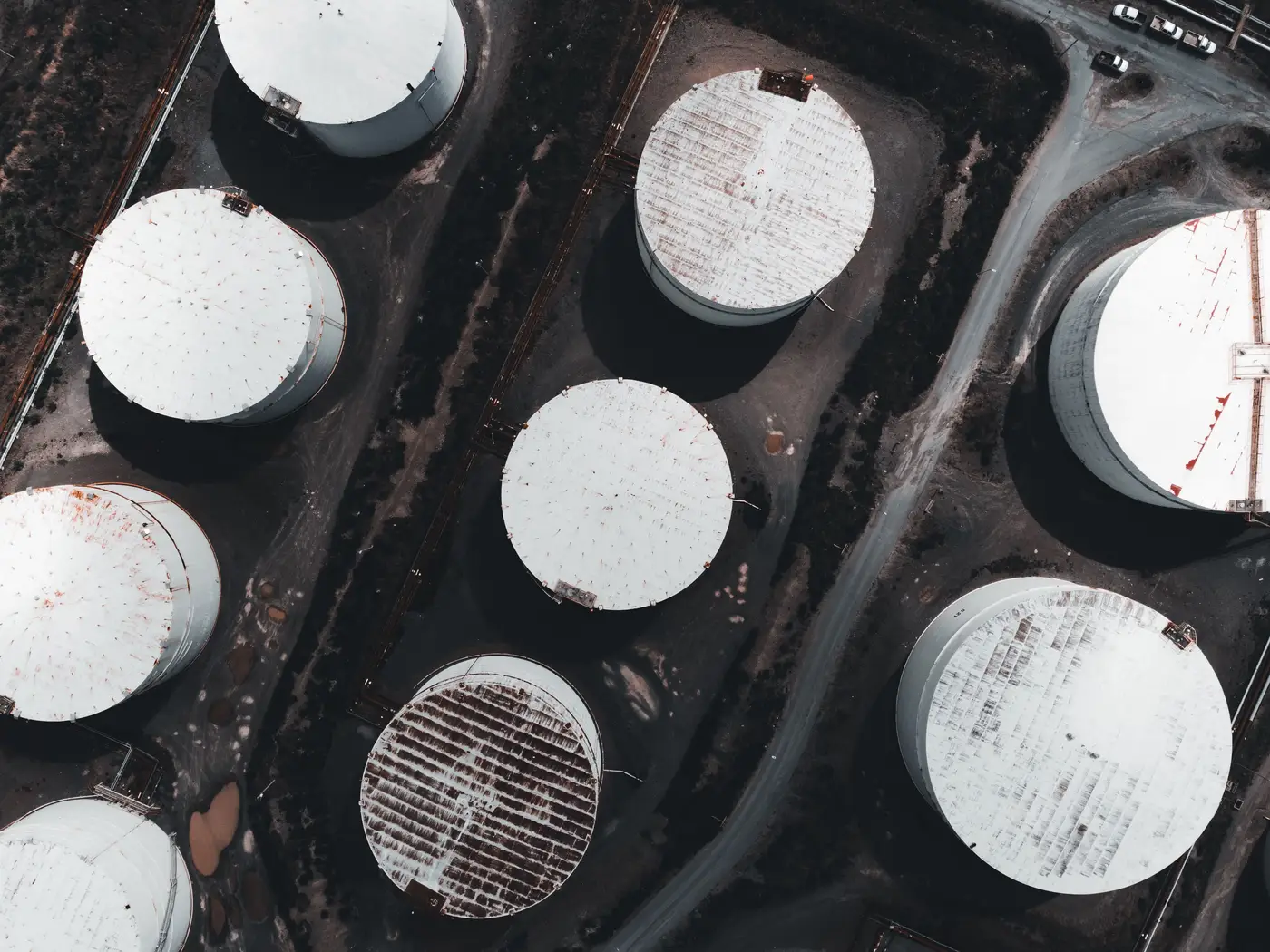
Late November is when the shadow method earns its keep, and also when it gets tested the hardest.
Every floating-roof tank reads the same way, in principle. The roof floats on the product. As the tank drains, the roof drops inside the shell, and the gap between the roof rim and the top of the shell throws a shadow whose length tells you how far down that roof has settled. Measure the shadow, know the sun's elevation angle for that pass, and you can back out the depth. It is geometry, not guesswork, on a clear day with the sun reasonably high.
The trouble starts around the solstice, earlier at higher latitudes, when the sun's maximum elevation for the day drops into the range where a shadow stops behaving like a ruler and starts behaving like a smear. At low enough angles, two things go wrong at once.
First, the cast gets long relative to the tank diameter, long enough that it crosses the shell wall, climbs the bund, or overlaps the tank standing next to it. Second, the edge goes soft. Low sun travels through more atmosphere, more haze, more of that low-contrast gray light that photographers call the golden hour until they try to measure something precise in it. A crisp noon line can be placed to the pixel. A cast at a 6-degree elevation fades over several pixels, and that blur costs more on a long line than it does on a short one.
We had a run of five days last week where a cluster of tanks sat close enough together, and the pass times lined up with a low enough sun, that the shadows from adjacent tanks overlapped. One tank's cast fell straight into the footprint of the tank behind it, erasing the clean floor needed to measure from. That tank got flagged as unreadable for the day. A confident-looking number pulled from a merged shadow is just a guess dressed up in a decimal point, and we'd rather send the flag.
That flag matters more than it sounds like it should. A fill estimate with no confidence marker looks identical whether the geometry was clean or garbage. A trader working off a feed that quietly interpolates through a bad read is worse off than one who gets told plainly that today's pass did not produce a usable shadow. The honest output on a bad-light day is fewer numbers, not worse numbers.
Terminals near the equator barely notice this effect; the sun stays high enough year-round that the shadow never gets long or soft. Terminals at higher latitude lose a window every winter where the only usable light is a narrow slice around solar noon, and on an overcast day even that slice is gone. A daily storage read built off shadow geometry alone needs a satellite pass timed closer to the sun's peak during that window, a wider tolerance on which days count as confirmed, or just an honest gap on the record instead of a filled-in blank.
None of this is a knock on the approach. Shadow geometry is still the only way to get a per-tank fill number without waiting on a terminal operator to publish one, and most of the year it works the way it should. The low-sun weeks are just the part of the job that reminds you it is physics, not magic, and that the read is only as good as the light it was taken in. If you're tracking storage off imagery, this is the kind of detail worth building into how you weight a daily number against last week's. The daily per-tank read is built around exactly that kind of light-aware honesty, flagging what it can't see instead of papering over it.
Keep that in mind next time a storage number looks suspiciously clean on a gray December afternoon.