What tank bottoms are, and why they never count as usable storage
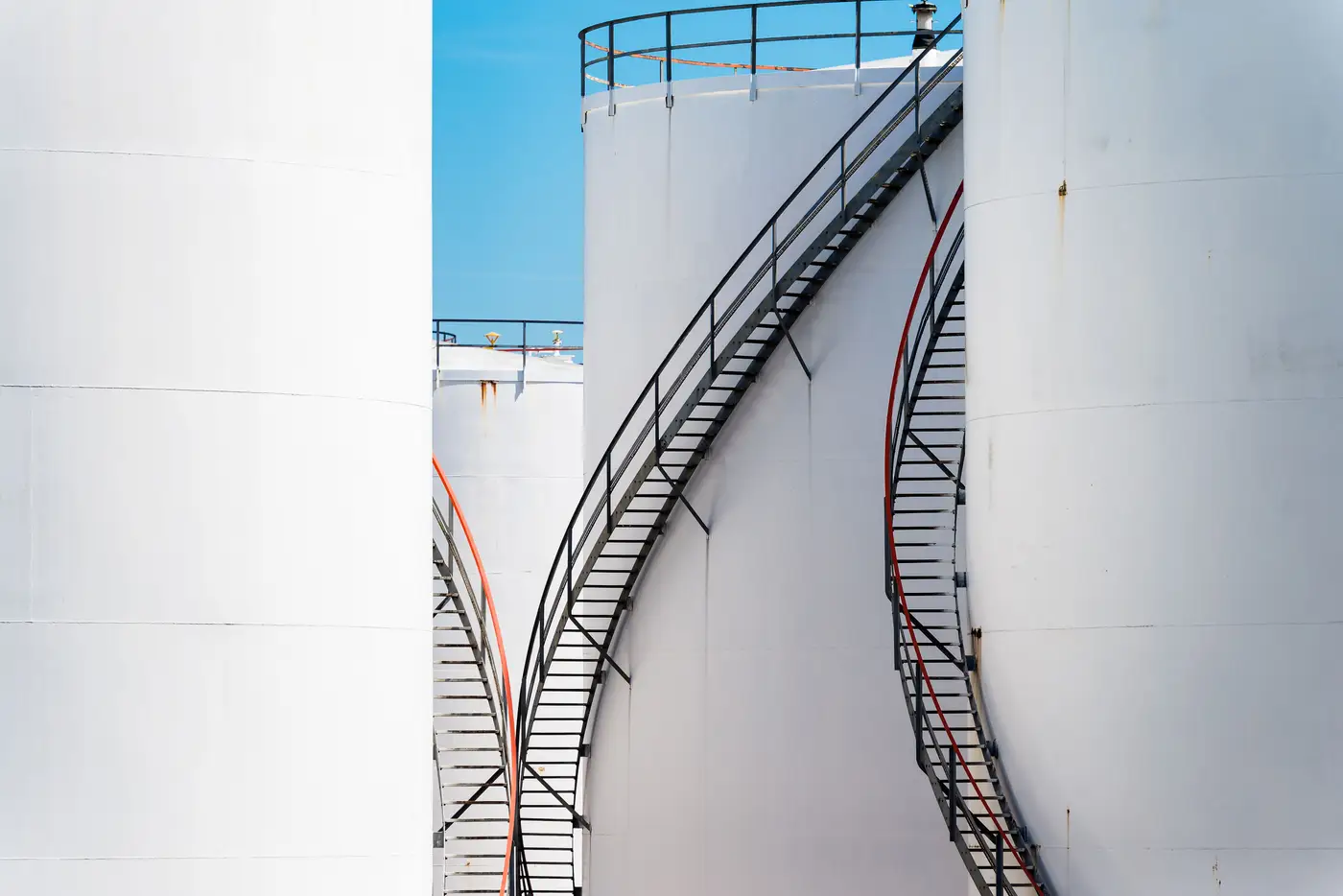
Every storage bulletin leans on nameplate capacity somewhere, and every trader who has drawn a tank down knows nameplate is not the number that matters. A 500,000-barrel shell doesn't give you 500,000 barrels of usable crude. A chunk of that volume sits at the bottom and stays there, report after report, year after year.
That chunk has a name: tank bottoms, or the tank heel. It's the crude you can't pull because the suction line sits above the floor, because sediment and water settle out and won't pump through the same way clean crude does, and because a floating roof has a low-stop level it's not built to go below. None of it is available to trade. All of it is counted in the shell's rated capacity anyway.
Nameplate capacity versus what you can draw
Nameplate, or shell, capacity is an engineering figure. It tells you how tall the tank is and how wide, multiplied out to a theoretical maximum. It's on the spec sheet because it's useful for construction and insurance purposes, not because it tells you anything about what's tradeable on a given day.
Working capacity is the number that matters to anyone pricing storage or estimating a regional draw. It's nameplate minus the heel, minus clingage, minus whatever margin the operator keeps at the top so the roof doesn't overflow during a fill. Depending on the tank's age, floor condition, and the crude grade it holds, that gap between nameplate and working capacity can run anywhere from a few percent to well over ten. A tank that's been in heavy rotation for thirty years with accumulated bottom sediment behaves differently than one relined five years ago, even if both show the same nameplate figure on a terminal's asset list.
This is why two analysts can look at the same EIA facility list and land on different storage estimates for a region. One is working off nameplate. The other has adjusted for heel and clingage on a tank-by-tank basis, which is slower but closer to what's sitting there.
Where the dead stock sits
A few things make up tank bottoms, and they're not interchangeable:
The heel is the layer of crude below the suction line, the physical floor-level volume that no amount of pumping will move without a dedicated stripping operation. Clingage is the thin film that coats the tank walls and internal structure as the level drops, crude that wets the steel and never makes it into the draw. Dead stock is the broader catch-all: heel, clingage, and any sediment or water layer (BS&W) that's settled out and sits below the drawable line. Some operators also hold a working margin near the top of a floating-roof tank, keeping the roof off its high stops so a late delivery doesn't force an overflow.
None of these show up on a public capacity listing. They show up in the gap between what a tank "should" hold on paper and what a terminal operator will report moving.
Why this matters when you're reading storage from outside
If you're tracking inventory levels off satellite or aerial imagery, the floating roof's shadow geometry tells you where the roof sits, which tells you how much crude is under it. But the roof doesn't sit at zero when the tank is "empty" in a trading sense. It rests at its low-stop level, above the heel, above the clingage, above whatever dead stock never leaves. A roof-position read that ignores that offset will overstate how much barrel-equivalent storage just opened up, every time.
That's the detail that matters when you're converting a daily roof-position read on a tank farm into a usable-barrels estimate instead of a nameplate one. Oil Tank Fill runs that shadow-geometry read per tank, daily, across whatever area you're watching, so the fill-level estimate you get reflects the tank's actual position rather than its spec-sheet maximum.
If nameplate-based storage math has been throwing off your draw estimates, it's worth seeing what a per-tank, daily roof read looks like instead.