Pontoon roof vs double-deck roof: what the roof type tells you about capacity
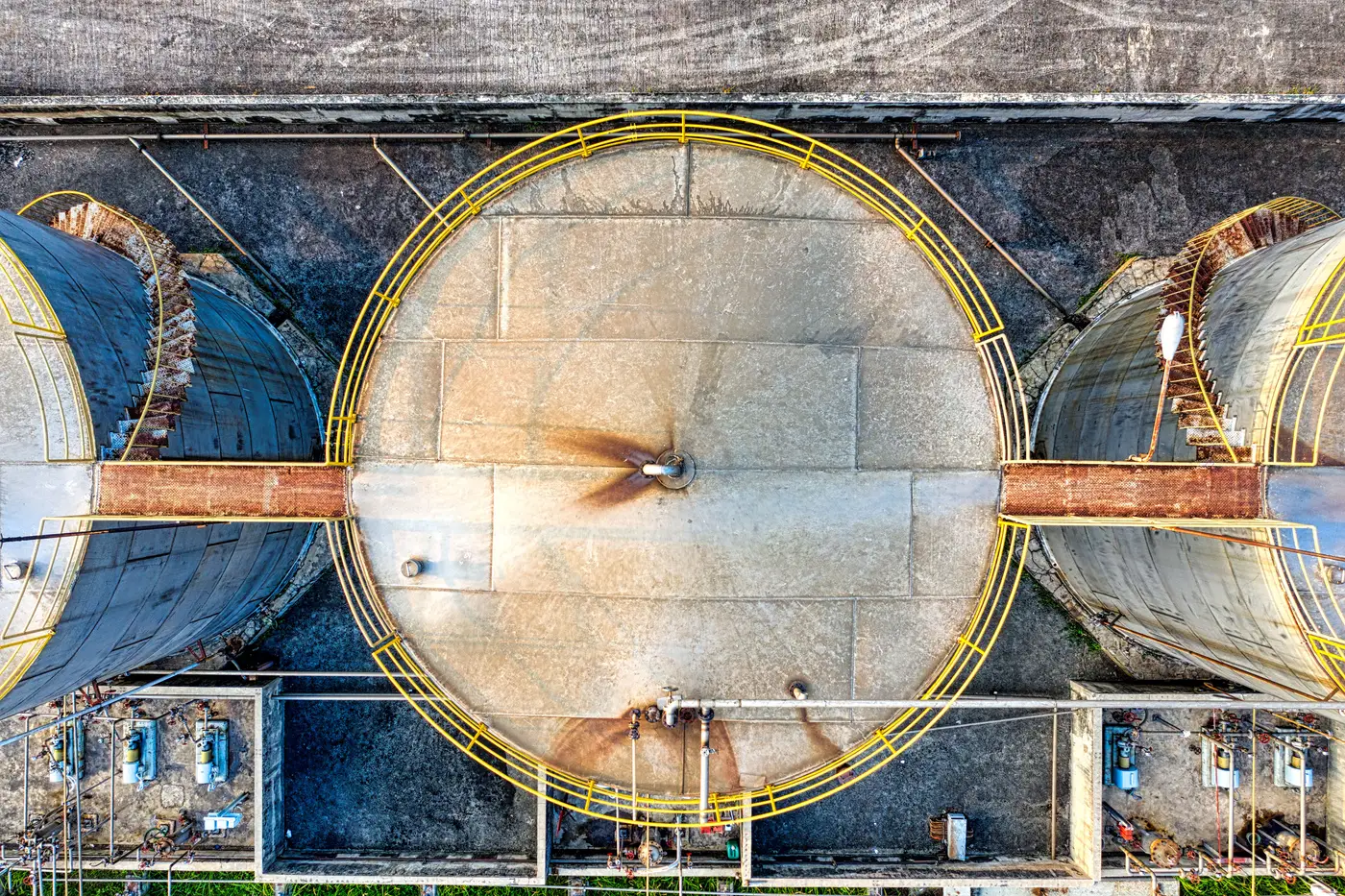
Anyone who has spent time matching aerial frames to a tank farm plot plan knows the roof isn't just a lid. It's a structural choice that tells you something about the tank's size class before you ever measure a shadow. Pontoon and double-deck roofs look similar from directly overhead, but the way each one sits on the product and casts a shadow line is different enough to matter.
The structural difference
A pontoon roof (sometimes called a single-deck roof) is a flat steel membrane across most of the tank diameter, with a ring of sealed pontoon compartments running around the outer rim like a life preserver. Those compartments supply the buoyancy. The center deck itself doesn't float on its own; it rides on a cushion of vapor trapped under it by the pontoon ring. Rim vents and walkway grating sit on top of the pontoons, and you'll often see the compartment seams as faint lines near the shell.
A double-deck roof does away with the single membrane. The entire roof is two steel decks, top and bottom, separated by a gap of a foot or two, divided into compartments the whole way across. It's more rigid, carries snow and rain load better, and floats higher and more evenly because buoyancy isn't concentrated at the rim. API 650 spec work generally pushes larger-diameter tanks toward double-deck construction because a single-deck membrane that wide is more prone to buckling and deck plate fatigue.
Why this changes what the shadow tells you
Read tank fill from an image rather than a gauge sheet, and that structural difference changes what the shadow is telling you. A pontoon roof's shadow comes mostly from the rim ring, since the flat center deck sits close to the liquid surface and throws almost no shadow of its own except at low sun angles. A double-deck roof throws a shadow from the full roof edge, because the deck itself has real thickness and sits proud of the liquid by the depth of that air gap. Mistake one roof type for the other and you can misjudge what a given shadow width means in terms of freeboard.
The bigger trap is the landed roof. Every floater has support legs that let it rest on the tank bottom, or on an internal structure, once the liquid drops below a minimum operating level, usually to keep it off direct contact with product residue. A landed one casts a shadow that looks a lot like a mid-level read if you don't know the leg height for that type, because it's sitting at a fixed low elevation rather than floating at the level the liquid would suggest. Pontoon and double-deck designs land at different heights for the same nominal tank, so knowing which type you're looking at is part of not getting fooled by an empty tank that still throws a shadow.
What roof type correlates with, and what it doesn't
Roof type is a decent proxy for tank diameter class. Smaller and mid-size tanks lean pontoon, larger ones lean double-deck, and a terminal built in phases will often show both types side by side. But roof type on its own doesn't tell you what's inside or how full a tank is on a given day. It tells you how to read the shadow that tank produces, which legs it lands on, and roughly how deep that bleeder vent and rim gap sit relative to the roof edge. Pair that with the tank's known shell height and you have the baseline you need before pulling a fill estimate from imagery.
That's the groundwork Oil Tank Fill handles automatically, keeping roof geometry straight tank by tank across a storage hub so the daily fill-level read for each tank accounts for whether it's riding on a pontoon ring or a double deck. If you're tracking storage ahead of the weekly inventory print, that's the kind of detail worth getting right before the number goes into your model.